 Add to Chrome
 Add to Firefox
 Add to Edge
Evaluation of Large Language Models in Legal Applications: Challenges, Methods, and Future Directions
Jan 21, 2026
Large language models (LLMs) are being increasingly integrated into legal applications, including judicial decision support, legal practice assistance, and public-facing legal services. While LLMs show strong potential in handling legal knowledge and tasks, their deployment in real-world legal settings raises critical concerns beyond surface-level accuracy, involving the soundness of legal reasoning processes and trustworthy issues such as fairness and reliability. Systematic evaluation of LLM performance in legal tasks has therefore become essential for their responsible adoption. This survey identifies key challenges in evaluating LLMs for legal tasks grounded in real-world legal practice. We analyze the major difficulties involved in assessing LLM performance in the legal domain, including outcome correctness, reasoning reliability, and trustworthiness. Building on these challenges, we review and categorize existing evaluation methods and benchmarks according to their task design, datasets, and evaluation metrics. We further discuss the extent to which current approaches address these challenges, highlight their limitations, and outline future research directions toward more realistic, reliable, and legally grounded evaluation frameworks for LLMs in legal domains.

A study on joint modeling and data augmentation of multi-modalities for audio-visual scene classification
Mar 31, 2022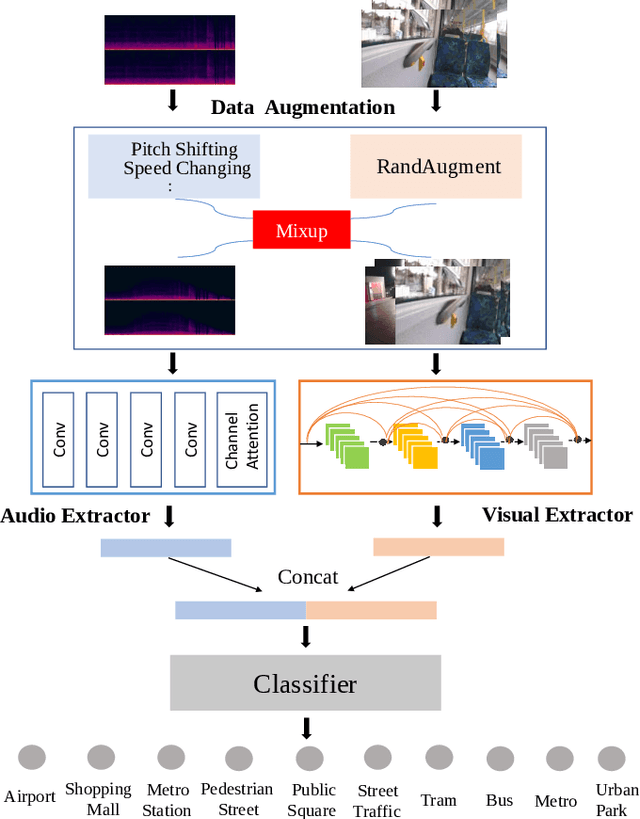
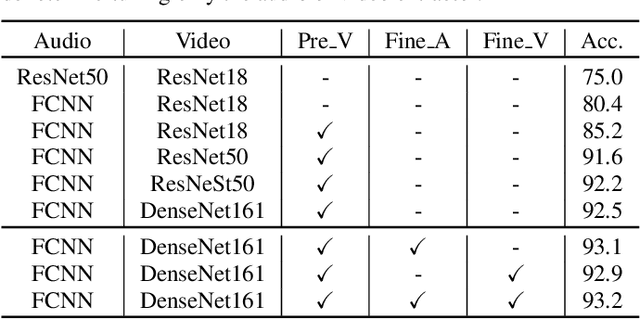
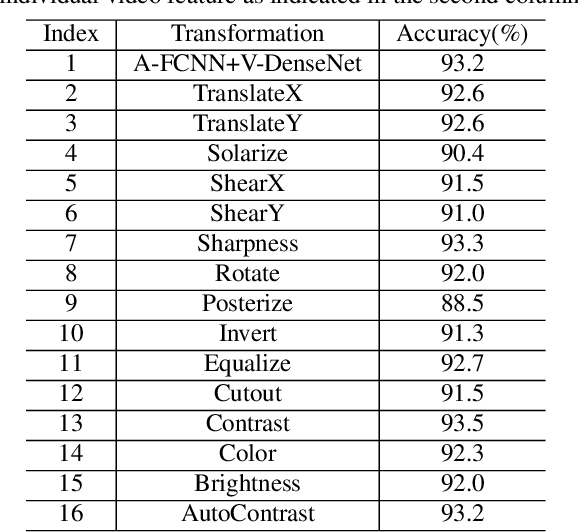
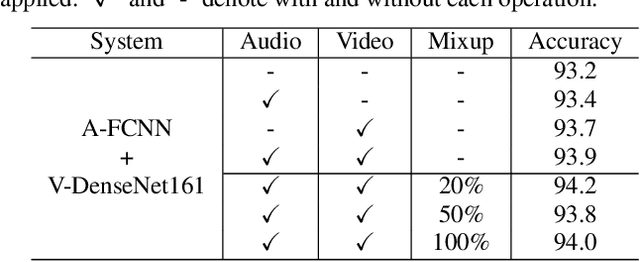
In this paper, we propose two techniques, namely joint modeling and data augmentation, to improve system performances for audio-visual scene classification (AVSC). We employ pre-trained networks trained only on image data sets to extract video embedding; whereas for audio embedding models, we decide to train them from scratch. We explore different neural network architectures for joint modeling to effectively combine the video and audio modalities. Moreover, data augmentation strategies are investigated to increase audio-visual training set size. For the video modality the effectiveness of several operations in RandAugment is verified. An audio-video joint mixup scheme is proposed to further improve AVSC performances. Evaluated on the development set of TAU Urban Audio Visual Scenes 2021, our final system can achieve the best accuracy of 94.2% among all single AVSC systems submitted to DCASE 2021 Task 1b.